

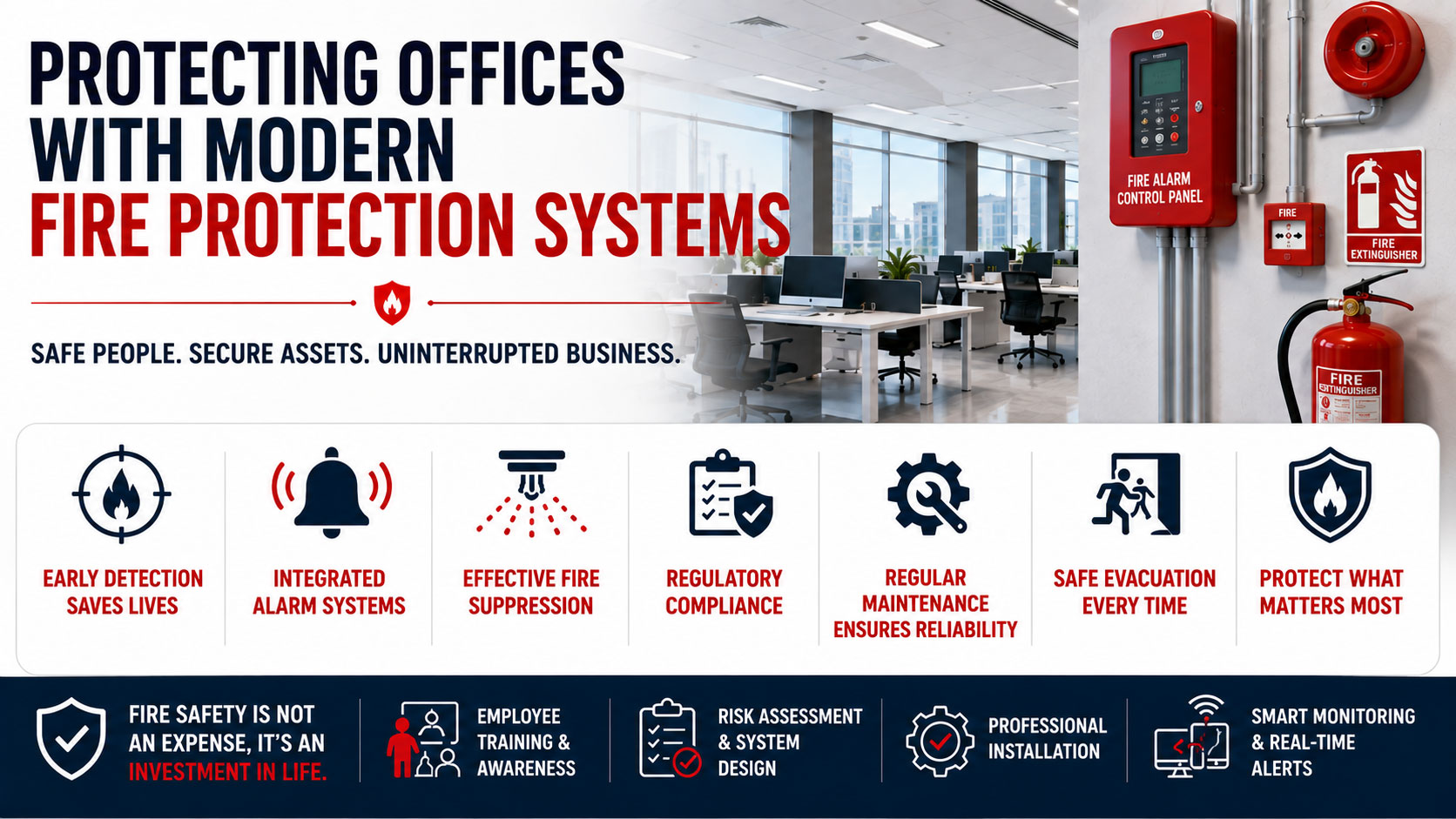
Modern fire protection systems safeguard offices through intelligent detection, rapid response, regulatory compliance, and proactive risk management, ensuring business continuity and employee safety.
Fire safety is one of the most critical aspects of modern office infrastructure. As workplaces become increasingly technology-driven and densely occupied, the risks associated with electrical equipment, server rooms, HVAC systems, and human activity continue to grow. A minor fire incident can result in significant financial losses, operational downtime, damage to valuable assets, and, most importantly, threats to human life. Modern fire protection systems are designed to prevent such incidents by detecting hazards early, responding rapidly, and ensuring safe evacuation.
Today, fire safety is no longer viewed as a regulatory requirement alone – it has become an essential component of responsible facility management and business continuity planning.
Why Fire Protection Matters More Than Ever
Modern offices house expensive equipment, critical business data, networking infrastructure, and valuable intellectual property. Even a small electrical fault or overheating device can trigger a fire that disrupts operations for weeks or even months.
A comprehensive fire protection system minimizes these risks by continuously monitoring the environment, detecting abnormal conditions, and activating emergency responses before the situation escalates. Investing in fire protection safeguards not only physical assets but also employee confidence and organizational reputation.
Early Detection Saves Lives
The effectiveness of any fire protection system depends on how quickly it detects a developing fire. Modern detection systems use advanced smoke detectors, heat detectors, multi-sensor detectors, and intelligent control panels that continuously monitor office environments.
Unlike conventional systems, addressable fire alarm systems identify the exact location of an incident, enabling emergency responders to act quickly. Early detection significantly reduces damage while providing occupants with valuable time to evacuate safely.
Integrated Fire Alarm Systems Improve Response
Modern fire protection solutions integrate multiple safety components into a unified system. Fire alarm panels communicate with smoke detectors, manual call points, emergency lighting, public address systems, access control systems, and building management systems.
Once a fire is detected, the system can automatically trigger alarms, unlock emergency exits, activate evacuation announcements, notify emergency services, and isolate affected areas. This coordinated response minimizes confusion and improves evacuation efficiency during emergencies.
Fire Suppression Protects Critical Assets
Detection alone is not enough. Effective fire protection also requires appropriate suppression systems designed for different environments. Office buildings commonly use sprinkler systems, fire extinguishers, hose reels, hydrants, and fire pumps as primary suppression methods. Sensitive areas such as server rooms, data centres, electrical control rooms, and communication facilities often require clean agent suppression systems that extinguish fires without damaging electronic equipment. Selecting the right suppression solution depends on the nature of the building, occupancy, and fire risk assessment.
Compliance Is a Business Responsibility
Fire safety regulations require commercial buildings to comply with national building codes and local fire department guidelines. Compliance involves proper system design, certified equipment, regular inspections, maintenance, and employee training.
Organizations that maintain compliant fire protection systems reduce legal liabilities while demonstrating their commitment to workplace safety. Routine audits also ensure that equipment remains fully operational throughout its service life.
Regular Maintenance Ensures Reliability
Even the most advanced fire protection system becomes ineffective without regular maintenance. Smoke detectors require periodic testing, alarm panels must be inspected, batteries replaced, sprinkler systems checked, hydrants tested, and extinguishers serviced according to manufacturer recommendations and statutory requirements. Preventive maintenance identifies potential failures before emergencies occur, ensuring that every component functions reliably when needed most.
Training Employees for Emergency Preparedness
Technology alone cannot guarantee fire safety. Employees should understand evacuation procedures, emergency exits, assembly points, and the correct use of portable fire extinguishers.
Regular fire drills improve preparedness and reduce panic during actual emergencies. Clearly marked escape routes, emergency signage, and evacuation plans further strengthen workplace safety. Creating a culture of awareness ensures that everyone knows how to respond quickly and responsibly.
Smart Fire Protection Systems
Advancements in technology are transforming traditional fire safety into intelligent fire management. Modern systems incorporate Internet of Things (IoT) sensors, Artificial Intelligence (AI), cloud monitoring, remote diagnostics, and predictive maintenance capabilities. Facility managers receive real-time alerts on mobile devices, enabling faster decision-making and proactive maintenance.
These intelligent systems reduce false alarms, improve response times, and provide detailed reporting that enhances overall building safety.
Partner with Fire Safety Experts
Designing an effective fire protection system requires specialized technical expertise. Every office has unique occupancy patterns, equipment, and operational risks that demand customized solutions.
Professional fire safety consultants perform detailed risk assessments, recommend suitable detection and suppression systems, ensure regulatory compliance, and supervise proper installation and commissioning. Long-term maintenance and periodic audits further ensure continuous protection throughout the building’s lifecycle.
Conclusion
Modern fire protection systems are essential investments that protect lives, assets, and business operations. They provide early detection, intelligent response, reliable suppression, regulatory compliance, and long-term operational security.
At Ashtamangal Solutions & Services, we provide end-to-end fire protection solutions for commercial offices, residential complexes, industrial facilities, and institutional buildings. From fire detection and alarm systems to hydrants, sprinklers, suppression systems, compliance audits, and annual maintenance, our experienced team delivers integrated fire safety solutions that combine engineering excellence with reliable execution.
A well-designed fire protection system is more than a safety requirement – it is a commitment to protecting people, preserving assets, and ensuring uninterrupted business continuity.
#FireProtection #FireSafety #OfficeSafety #FireAlarmSystem #FireSuppression #CommercialSafety #FireSafetyConsulting #BuildingSafety #AshtamangalSolutions #WorkplaceSafety