
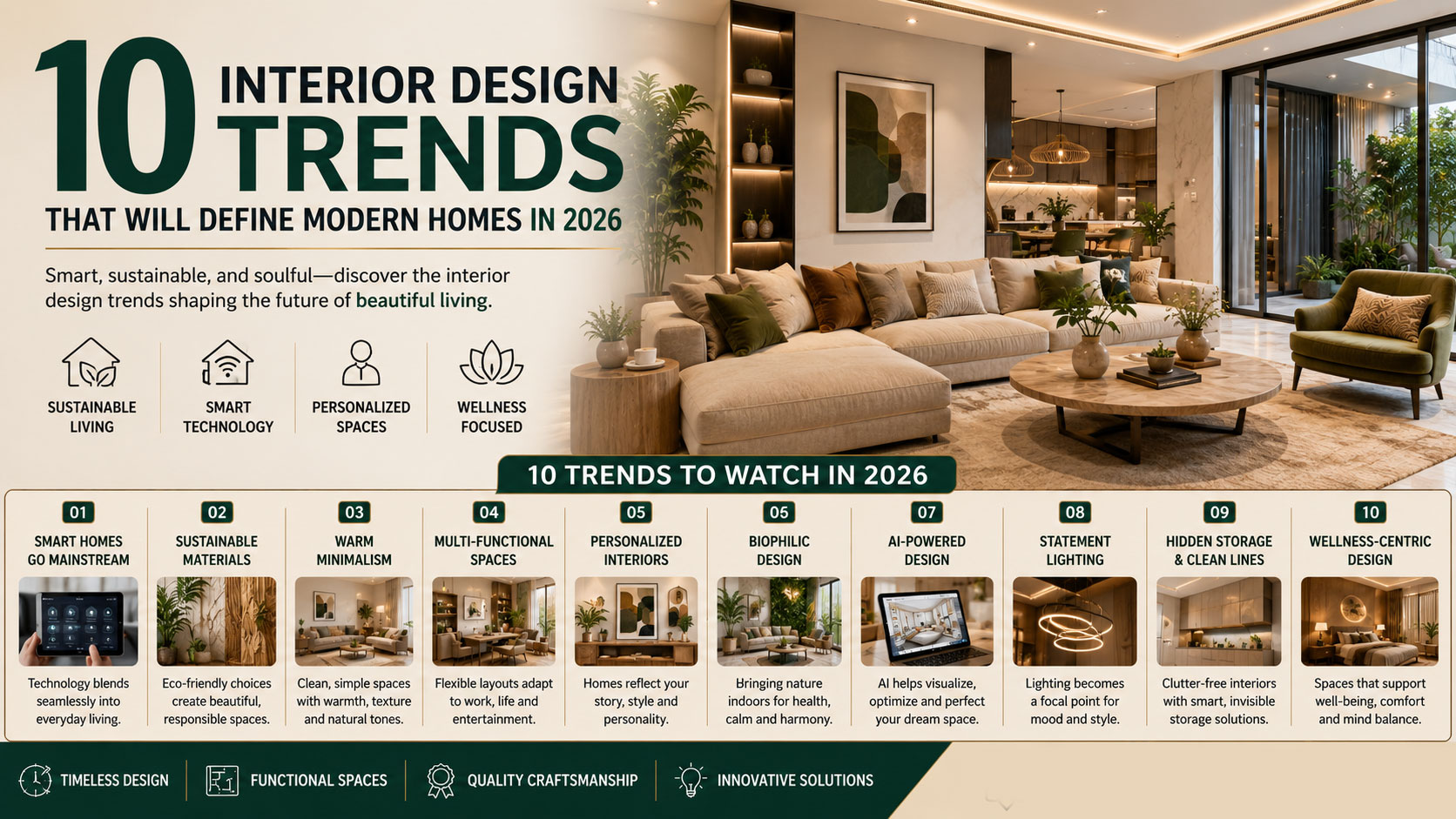
Discover the top interior design trends for 2026, where sustainability, smart technology, personalization, and timeless aesthetics combine to create intelligent and elegant homes.
Interior design continues to evolve as homeowners seek spaces that are not only beautiful but also intelligent, sustainable, and adaptable. In 2026, modern homes will focus on creating meaningful living experiences through thoughtful design, smart technology, and environmentally conscious choices. Whether you are building a new home or renovating an existing one, understanding these emerging trends can help you create a space that remains stylish and functional for years to come.
1. Smart Homes Become the New Standard
Technology is becoming an integral part of modern interiors rather than an optional luxury. Smart lighting, automated curtains, intelligent climate control, AI-powered security systems, and voice-controlled devices are now seamlessly integrated into home design.
Instead of visible gadgets, homeowners prefer technology that blends naturally into interiors while improving convenience, security, and energy efficiency.
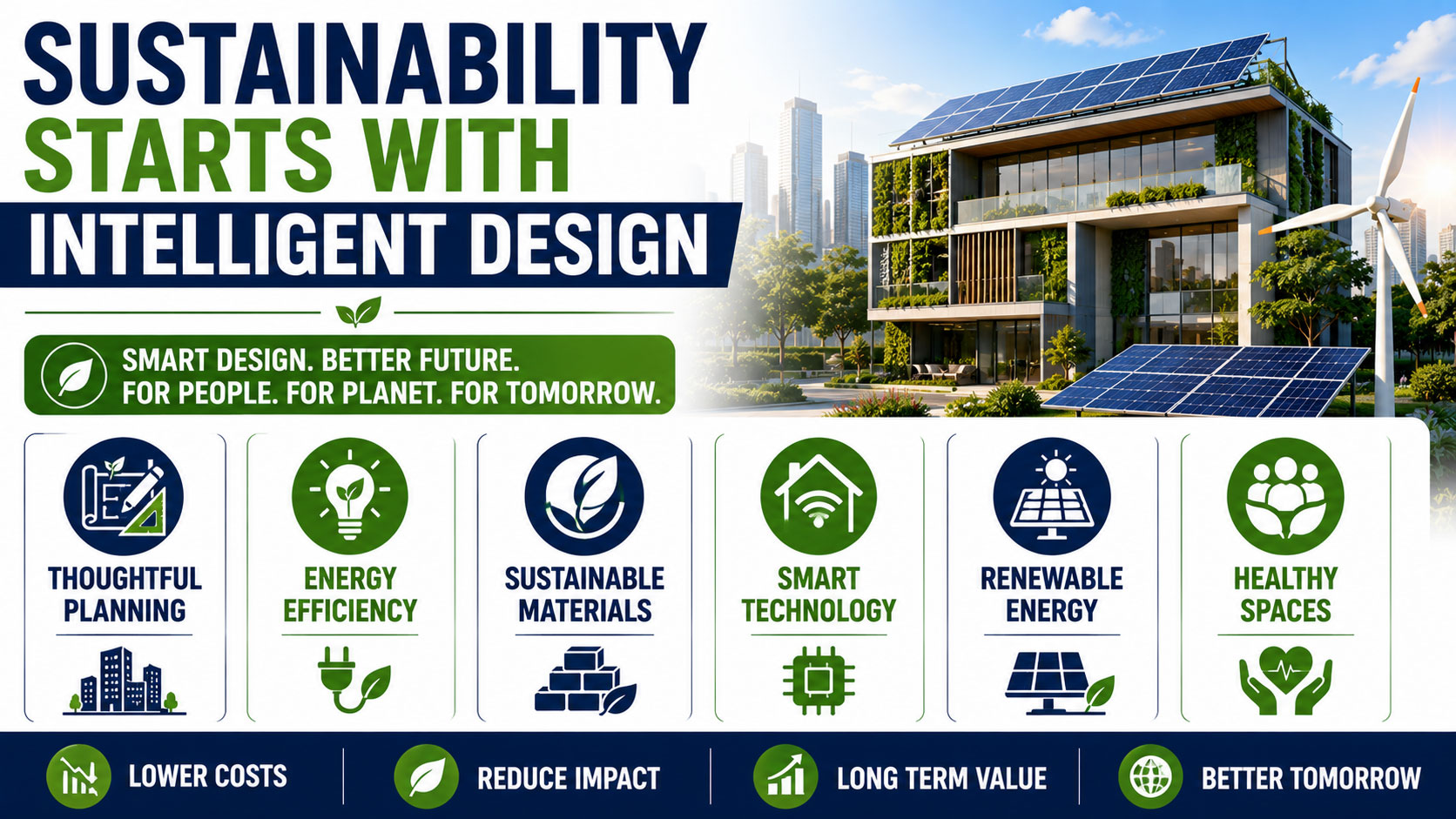
2. Sustainable Materials Take Center Stage
Sustainability is influencing every aspect of interior design. Homeowners are increasingly choosing eco-friendly materials such as engineered wood, recycled products, bamboo flooring, low-VOC paints, and energy-efficient lighting.
Designers are focusing on reducing waste while selecting durable materials that offer long-term value. Sustainable interiors are no longer a trend – they are becoming a necessity.
3. Warm Minimalism Replaces Cold Minimalism
Minimalism continues to evolve with a warmer and more inviting character. Instead of stark white spaces, modern homes now feature earthy tones, textured fabrics, natural wood finishes, and soft lighting.
This approach combines simplicity with warmth, creating interiors that feel elegant, comfortable, and welcoming.
4. Multi-Functional Spaces Gain Importance
As work, learning, and entertainment increasingly happen at home, every room needs to serve multiple purposes.
Living rooms transform into workspaces during the day, guest bedrooms become home offices, and modular furniture allows homeowners to maximize available space without compromising aesthetics. Flexible layouts have become essential in modern interior planning.
5. Personalized Interiors Replace Generic Designs
Homeowners are moving away from catalogue-inspired interiors and embracing personalized spaces that reflect their lifestyles and personalities.
Custom furniture, unique artwork, family collections, handcrafted décor, and bespoke storage solutions create interiors with character and emotional value. The future belongs to homes that tell personal stories.
6. Natural Light and Biophilic Design
Connecting interiors with nature continues to be one of the strongest design trends. Large windows, indoor plants, natural ventilation, stone finishes, wooden textures, and open balconies help create healthier and more relaxing environments.
Biophilic design not only improves aesthetics but also enhances mental well-being and indoor air quality.
7. AI-Powered Interior Design
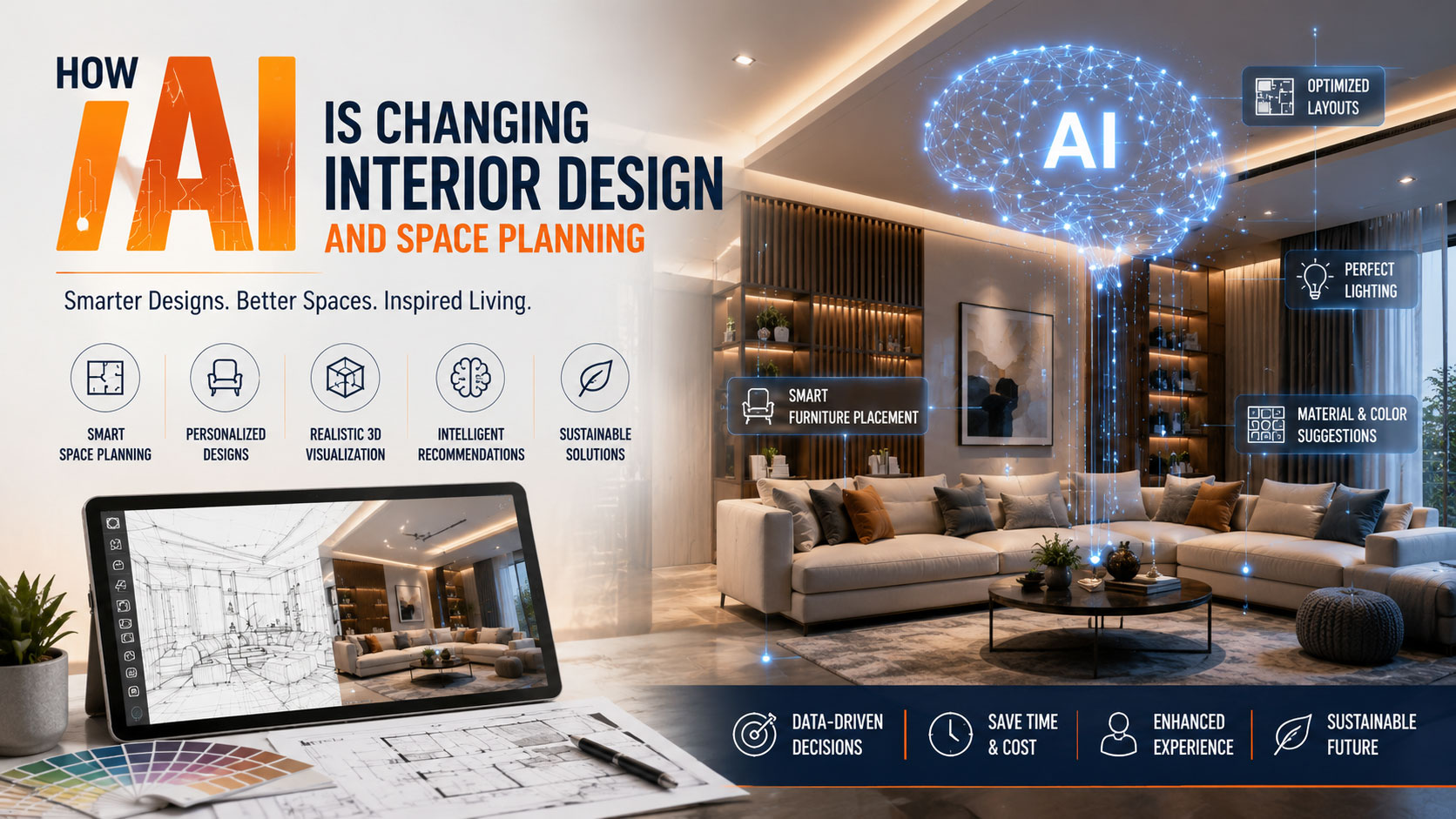
Artificial Intelligence is transforming the design process by helping homeowners visualize spaces before construction begins. AI assists designers with space planning, furniture placement, color selection, lighting optimization, and realistic 3D visualization. It also enables faster design iterations and smarter material selection based on lifestyle and budget.
Technology is becoming a creative partner rather than replacing human designers.
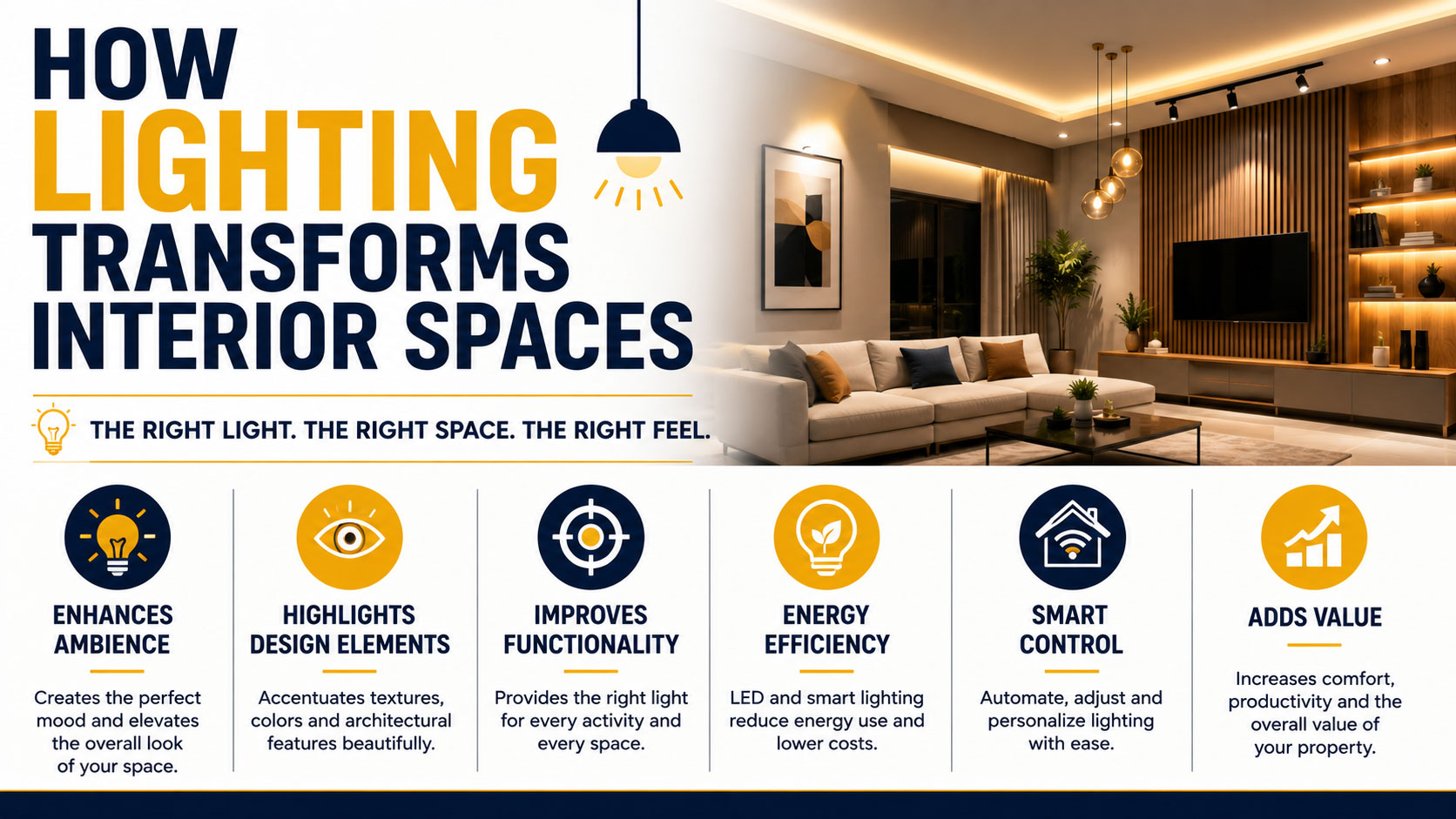
8. Statement Lighting Becomes a Design Feature
Lighting is evolving beyond functionality to become a major design element. Decorative pendant lights, recessed ambient lighting, wall washers, cove lighting, and layered illumination create dramatic interiors while improving comfort and energy efficiency.
Smart lighting systems allow homeowners to adjust brightness and mood according to different activities.
9. Hidden Storage and Clean Lines
Modern homes prioritize clutter-free living through intelligent storage solutions. Built-in wardrobes, concealed cabinets, under-bed storage, floating furniture, and modular shelving maximize space while maintaining clean and elegant interiors.
The emphasis is on creating visually calm environments without sacrificing practicality.
10. Wellness-Centric Interior Design
Homes are increasingly being designed to promote physical and emotional well-being. Dedicated meditation corners, ergonomic workspaces, better indoor air quality, acoustic comfort, wellness lighting, and calming colour palettes create environments that support healthier lifestyles.
Interior design is no longer just about appearance – it is about enhancing everyday living.
Designing Homes for the Future
The homes of 2026 will successfully combine design, technology, sustainability, and personalization. Rather than following temporary trends, homeowners should invest in solutions that improve comfort, efficiency, and long-term value.
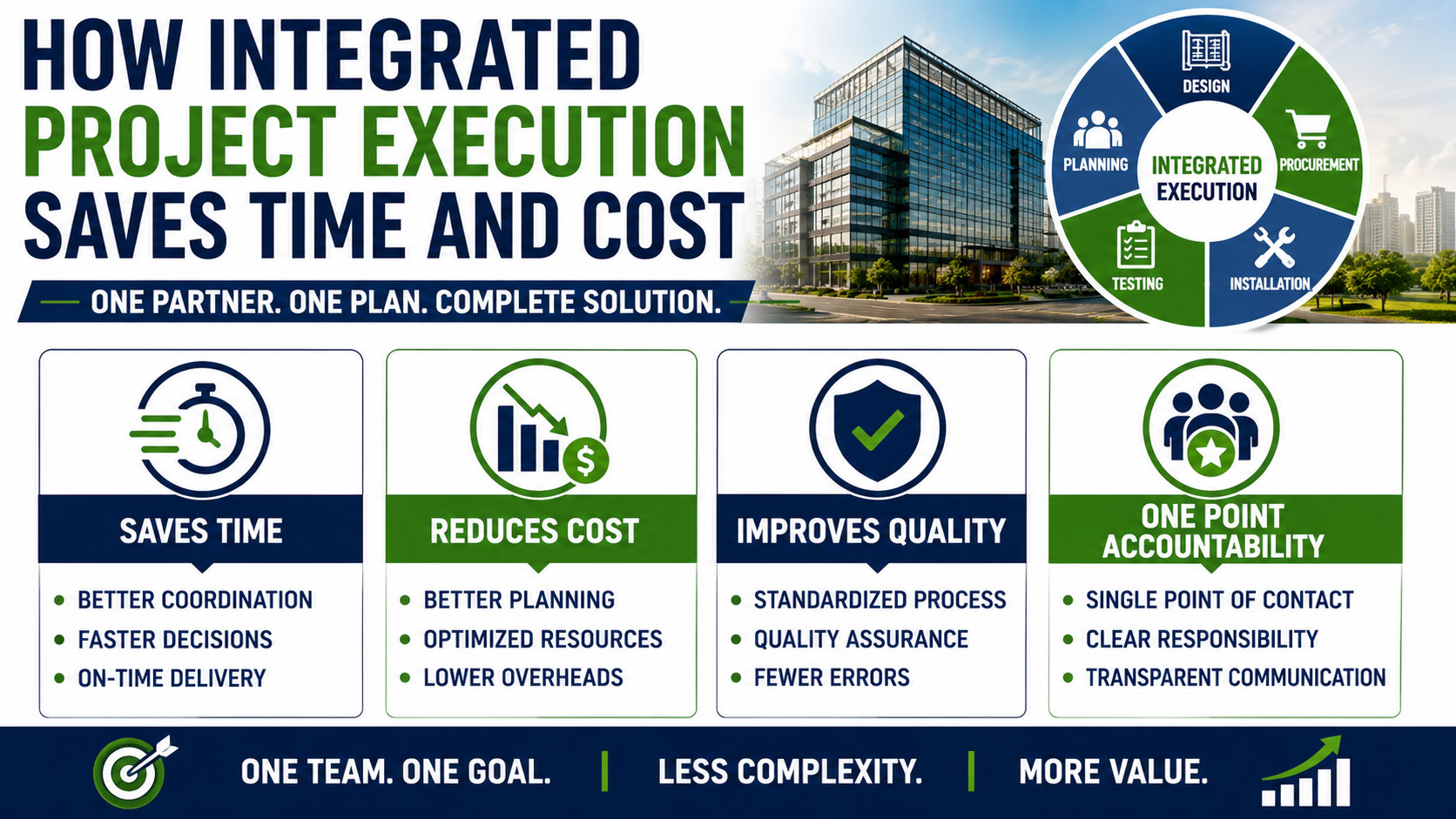
At Ashtamangal Solutions & Services, we believe every home should reflect the unique lifestyle of its occupants while embracing the latest innovations in design and engineering. Our integrated approach combines intelligent planning, premium craftsmanship, smart technologies, and sustainable practices to create beautiful homes that remain relevant for years to come.
The future of interior design is not simply about creating attractive spaces – it is about designing homes that are smarter, healthier, more sustainable, and perfectly suited to modern living.
#InteriorDesignTrends2026 #ModernInteriors #SmartHomes #AIInteriorDesign #SustainableDesign #LuxuryInteriors #HomeDecor #TurnkeyInteriors #AshtamangalSolutions #InteriorDesign